Complete sequence of Orthohantavirus andesense virus: Swiss resident 2026

Posted on behalf of the Swiss National Reference Center for Emerging Viral Infections, Geneva University Hospitals and the Institute of Medical Virology, University of Zurich (Partner Laboratory National Reference Center for Emerging Viral Infections).

On 5 May 2026, the Swiss National Reference Center for Emerging Viral Infections (Geneva University Hospitals) confirmed a case of Andes strain in a Swiss resident who had travelled on the MV Hondius cruise ship. The virus was sequenced from blood samples jointly by the Institute of Medical Virology (University of Zurich) and the Swiss National Reference Center for Emerging Viral Infections (Geneva University Hospitals) using Illumina technology (MiSeq instrument). The consensus sequence was generated with a minimum coverage of 5 reads.

The complete ANDV/Switzerland/Hu-3337/2026 consensus sequence for each of the 3 segments can be found here:

ANDV-Switzerland-Hu-3337-2026.fasta.gz (3.8 KB)
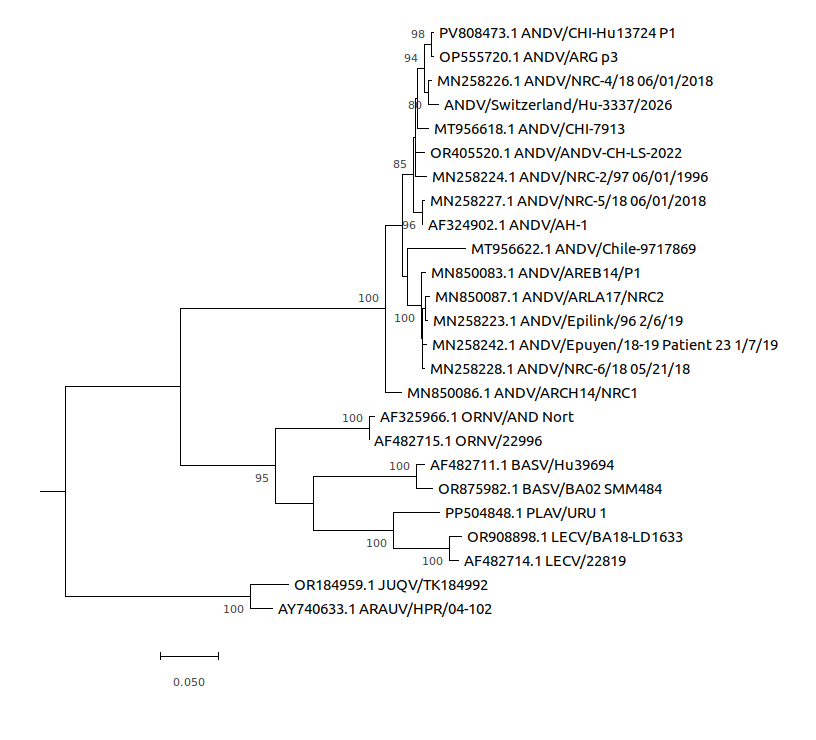
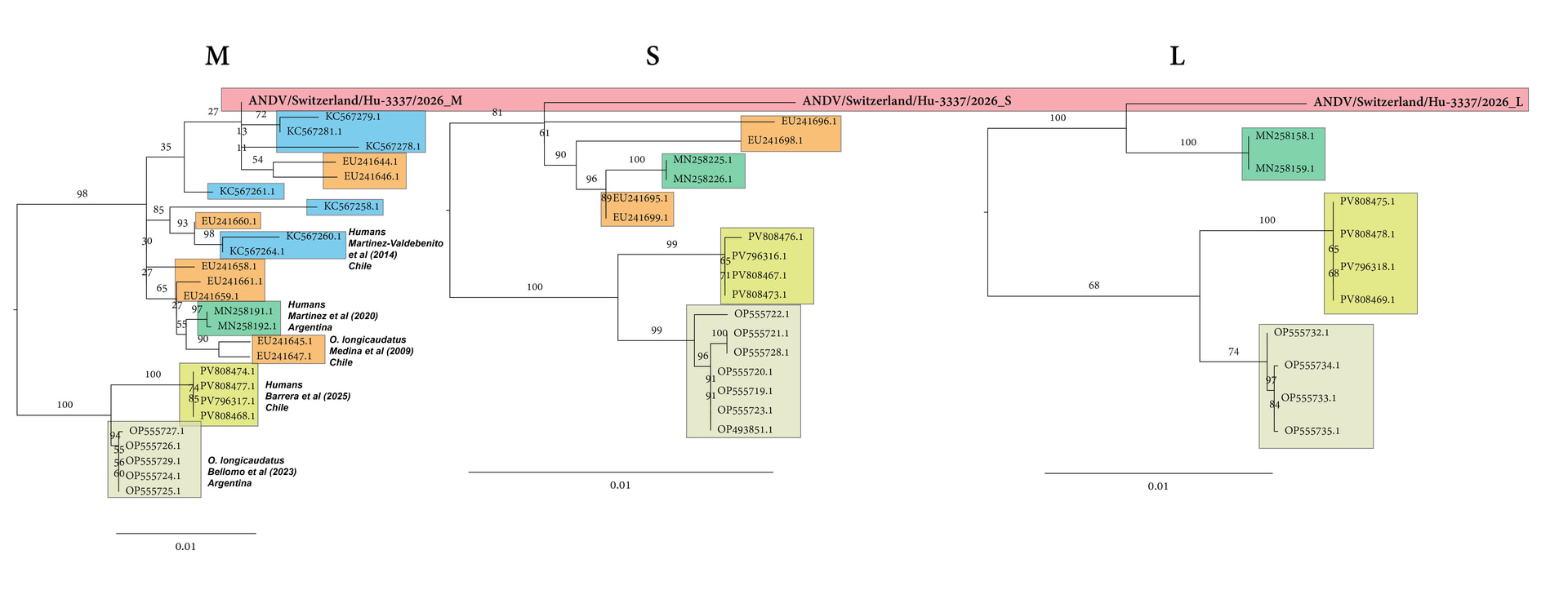
Figure 1: Maximum-likelihood tree based on the complete nucleocapsid coding sequence from the S segment of Andes virus strains.

Authors (in alphabetical order):

Bloemberg Guido - University of Zurich, Zurich, Switzerland

Chudzinski Valentin - Geneva University Hospitals, Geneva, Switzerland

Cordey Samuel - Geneva University Hospitals, Geneva, Switzerland

Huber Michael - University of Zurich, Zurich, Switzerland

Laubscher Florian - Geneva University Hospitals, Geneva, Switzerland

Pérez-Rodríguez Francisco-Javier - Geneva University Hospitals, Geneva, Switzerland

Pichler Ian - University of Zurich, Zurich, Switzerland

Schibler Manuel - Geneva University Hospitals, Geneva, Switzerland

Thomasson Valentine - Geneva University Hospitals, Geneva, Switzerland

Ziltener Gabriela - University of Zurich, Zurich, Switzerland
12 Likes

Thanks for this post. Do you have trees of the other segments you could post here?

Thank you for sharing these data and for providing details on the sequencing approach used to generate the Andes virus consensus sequence.

It would be very useful to better understand the sequencing and analysis workflow, particularly to assess which technical challenges may arise when sequencing this virus directly from clinical samples.

Could you provide some additional details on the sample and sequencing output? In particular:

What was the Ct value or estimated viral load of the original blood sample?
Was sequencing performed directly from the clinical sample, or was any enrichment step used before sequencing?
If enrichment was used, what type of strategy was applied, for example amplicon-based enrichment, hybrid capture, target enrichment, rRNA depletion, or another approach?
How many total reads were generated for the sample?
How many reads, or what percentage of reads, were assigned to Andes virus?
Which bioinformatic workflow was used for read classification, mapping/assembly and/or consensus generation?
Which reference sequence or database was used for mapping or taxonomic assignment?
Were any criteria applied beyond the minimum coverage threshold of 5 reads to mask low-confidence positions or validate the consensus?

Thank you again!

1 Like

Thank you again for sharing these data!

Do you plan to also release the raw sequencing data (either as de-humanized .fastq.gz or aligned .bam files)? e.g. for testing and tweaking bioinformatics workflow.

Some information on the protocol we used at the Geneva University Hospitals.

We used an unbiased mNGS approach directly on the clinical sample (plasma) as follows:

Virus nucleic acid extractions done on a eMAG instrument (bioMĂ©rieux) (initial sample volume = 400 ”l, elution =50 ”l). 10 ”l of eluate (the same as that used to perform the rRT-PCR analysis) was used to construct the library. Ribosomal RNA was removed using the Ribo-Zero Gold depletion kit (Illumina) prior to the preparation of the library (TruSeq total RNA preparation protocol, Illumina). Library was run on a MiSeq instrument (2 × 100-bp protocol).

Bioinformatic Analysis :

- Trimming/Filtering: trimmomatic Version=0.36

- Dehosting: snap-aligner Version=1.0beta.18, DB:=gencode_v43

- Assembly: IDBA-UD Version=1.1.3

- Remaping : snap-aligner Version=1.0beta.18

Total reads = 24936538 (56.608 % Human RNA)

ANDV/Switzerland/Hu-3337/2026 sequence:

Segment reads median depth

L 67979 766

M 48785 954

S 17976 739

3 Likes

At the University of Zurich, we also used an unbiased metagenomic NGS approach.

In total, there were 3.1 M quality-filtered reads, of which 2.9 M were human.

There were 15,690 ANDV reads;

  • 7,521 reads mapped to seg. L (PV808472.1): 154X mean coverage
  • 6,434 reads mapped to seg. M (PV808471.1): 236X mean coverage
  • 1,735 reads mapped to seg. S (PV808470.1): 122X mean coverage

For read mapping and consensus sequence generation, we used the Burrows–Wheeler Aligner (BWA v0.7.19), SAMtools (v1.21), and MEGAHIT (v1.2.9).

Prior diagnostic testing by qPCR performed in Geneva detected ANDV in the plasma with a Ct value of 20.5.

2 Likes

Thank you for sharing.
(And also same question as above: would you ming sharing, e.g., aligned reads .bam in the close future? I would like to make sure that V-pipe can handle this as well as VirMet)

Thank you for sharing! Had some free time and had a go at making some segment trees.

Brief methods:

  • Downloaded all taxid 1980456 nucleotide sequences
  • Separated by segment and made some preliminary alignments and fasttree phylogenies
  • Manually picked the sequences clustering closest with the new virus and remade proper nucleotide alignments and trees for each segment (alignments: mafft localpair, trees: iqtree2, 10,000 UFbootstraps)

Here’s the trees (closest clade only) for all three segments:

Long story short, looks like a likely spillover from the O. longicaudatus rodent Argentina/Chile natural reservoir from a clade of Andes hantavirus that frequently infects humans.

I summarise the papers that describe the related viruses below:

KC accessions (blue):

Martinez-Valdebenito (2014): https://doi.org/10.3201/eid2010.140353

Human cases in Chile (Note: the sequences on this tree are the “control samples” described in the study and not the ones of the five patients of the outbreak described in the paper; M segment only).

EU accessions (orange):

Medina et al (2009): https://doi.org/10.1128/jvi.01057-08

Naturally infected Oligoryzomys longicaudatus (natural reservoir) from Chile

MN accessions (green):

Martinez et al (2020): https://doi.org/10.1056/NEJMoa2009040

2018-2019 outbreak in humans in Argentina

PV accessions (yellow):

Barrera et al (2025): https://doi.org/10.1016/j.crmicr.2025.100472

2024 outbreak in humans in Chile

OP accessions (grey):

Bellomo et al (2023): https://doi.org/10.1128/msphere.00018-23

Naturally infected Oligoryzomys longicaudatus (natural reservoir) from Argentina

All alignments, trees, and metadata here:

ANDV_summary_080526-spyros.zip (190.9 KB)

Let’s hope no more transmission of this one! :crossed_fingers:

Spyros

5 Likes

I’ve also been looking into getting a Nextstrain build up. I’m still checking and hope to put online later tonight CET.

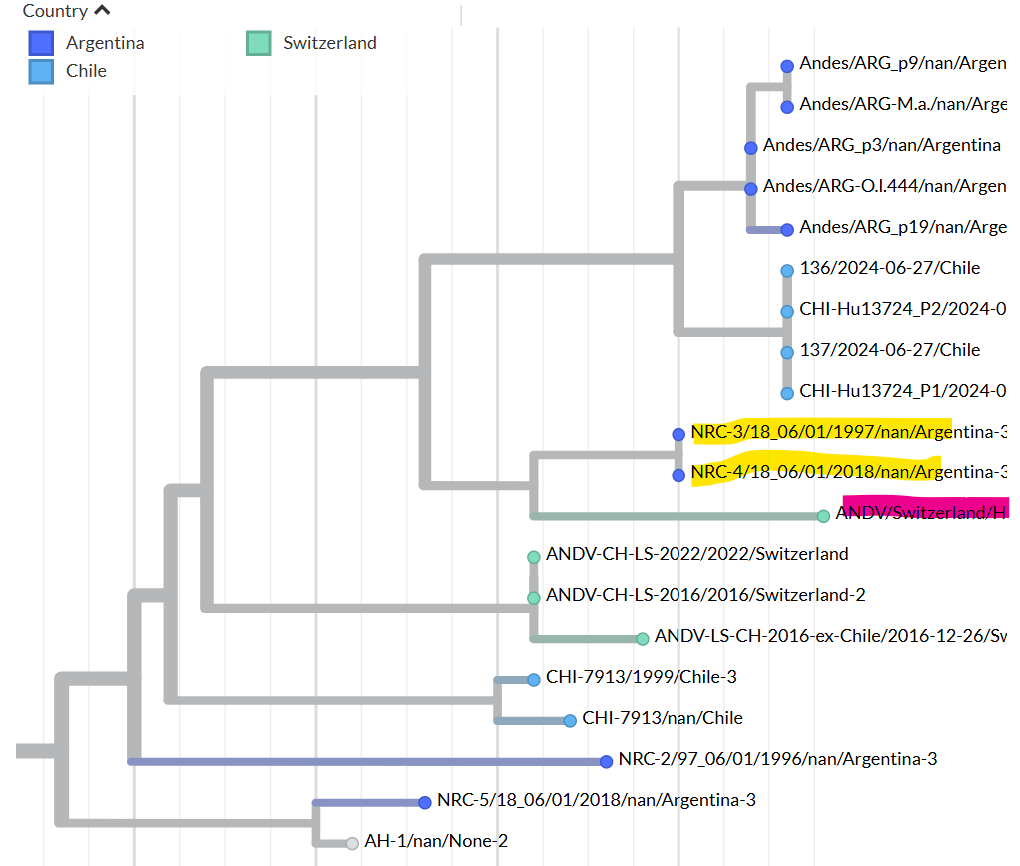
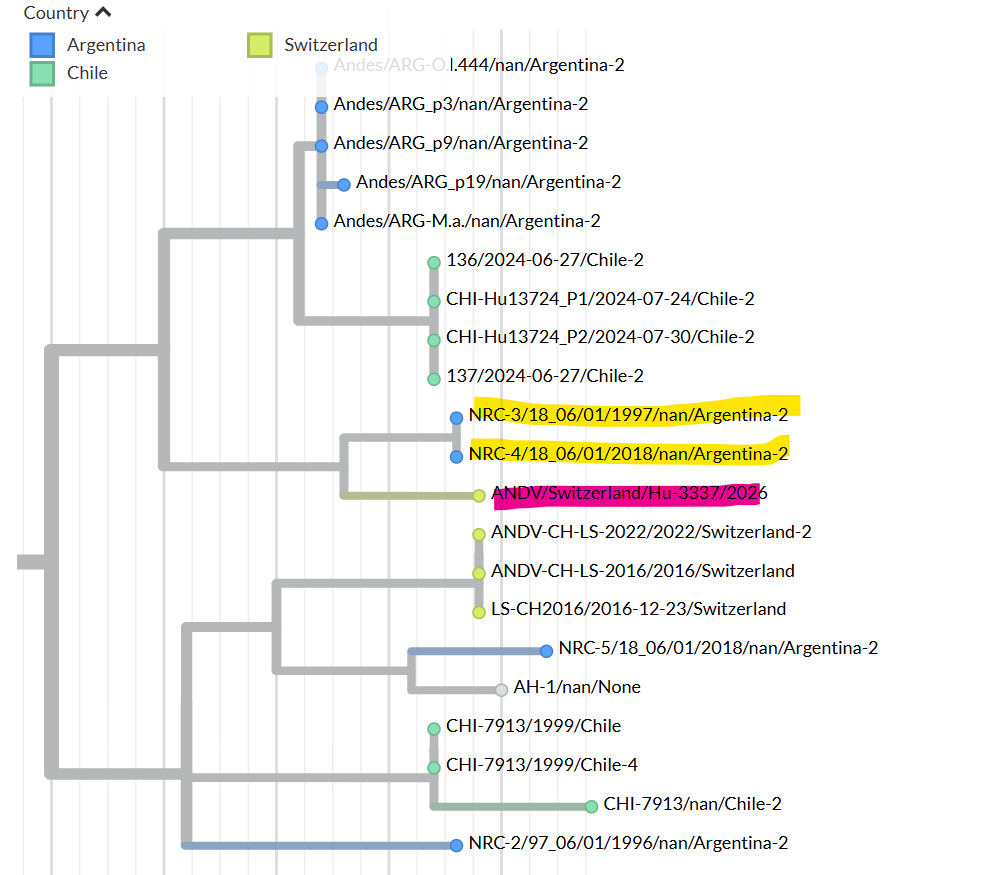
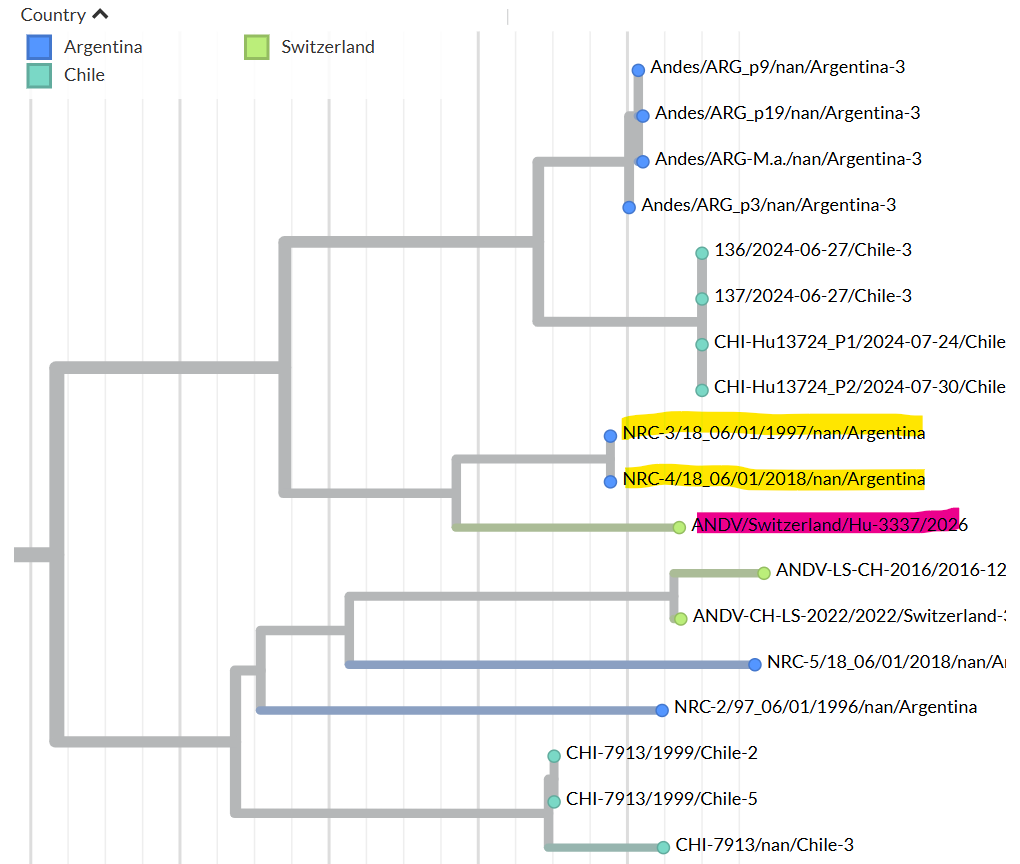
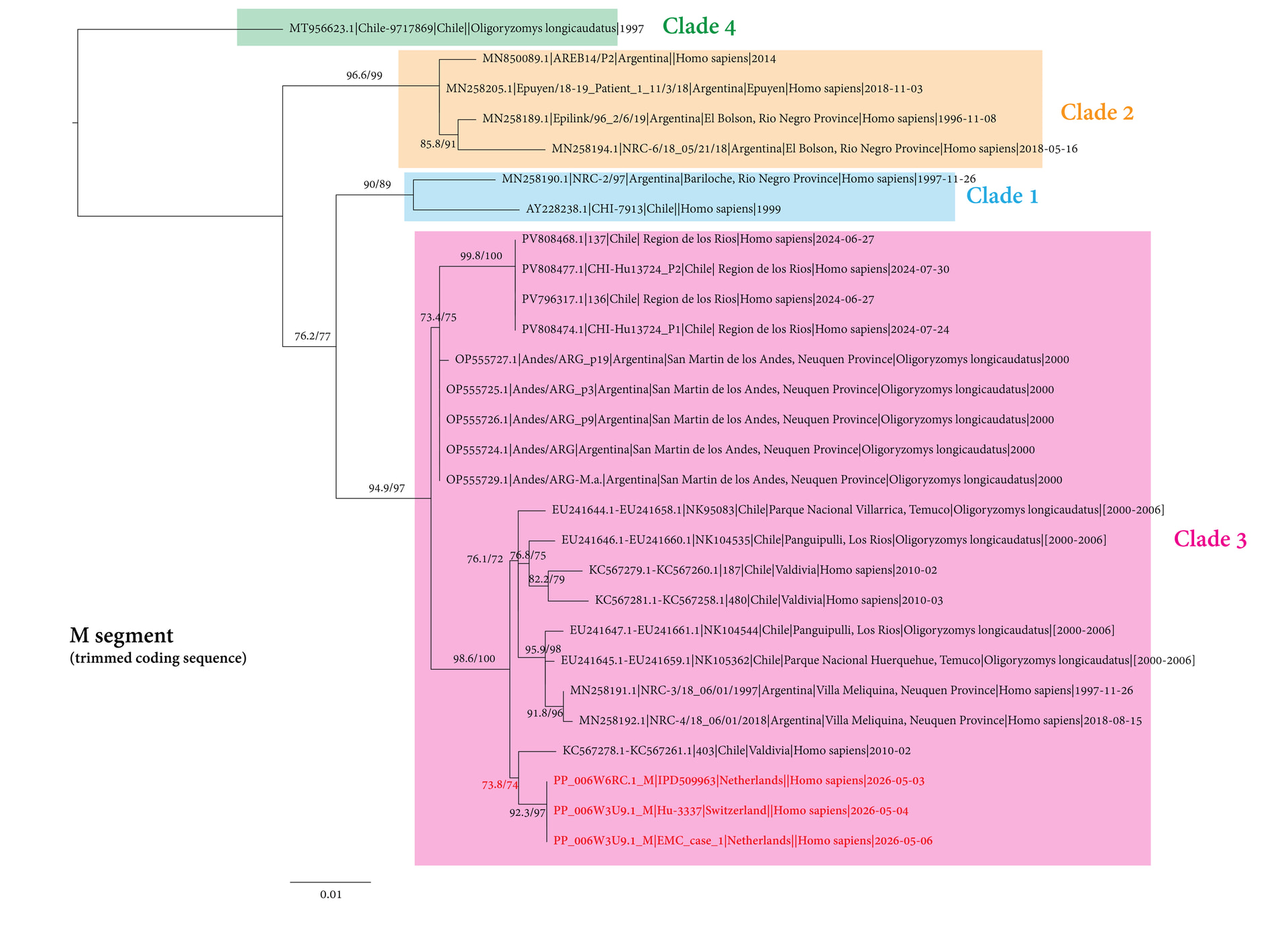
However, in case useful, it seems that across segments the viruses that sit most closely to the new Swiss sequence are consistent, suggesting there hasn’t been reassortment.
Do note there are not always all 3 segments available for all samples.

I apologise that colours do not match, and will try to fix this, too!

Screenshots zoomed in to show only nearby sequences to the new sequence. New Swiss sequence highlighted in pink, nearest neighbours in yellow.

S:

M:

L:

5 Likes

Great Job

Which RT-qPCR was used for the diagnostic ?

Interactive Nextstrain builds for Andes variant:
:dna: Segment S Segment M Segment L

Suggestions for seqs to kick out or etc welcome. Will try to continue to improve.

1 Like

The RT-PCR protocol is published on our website https://www.hug.ch/sites/interhug/files/structures/centre_maladies_virales_emergentes/Documents/andes-virus-rt-pcr-protocol-hug_080526.pdf

It is an in house protocol based on this paper: Kramski, Marit, et al. “Detection and typing of human pathogenic hantaviruses by real-time reverse transcription-PCR and pyrosequencing.” Clinical chemistry 53.11 (2007): 1899-1905.

1 Like

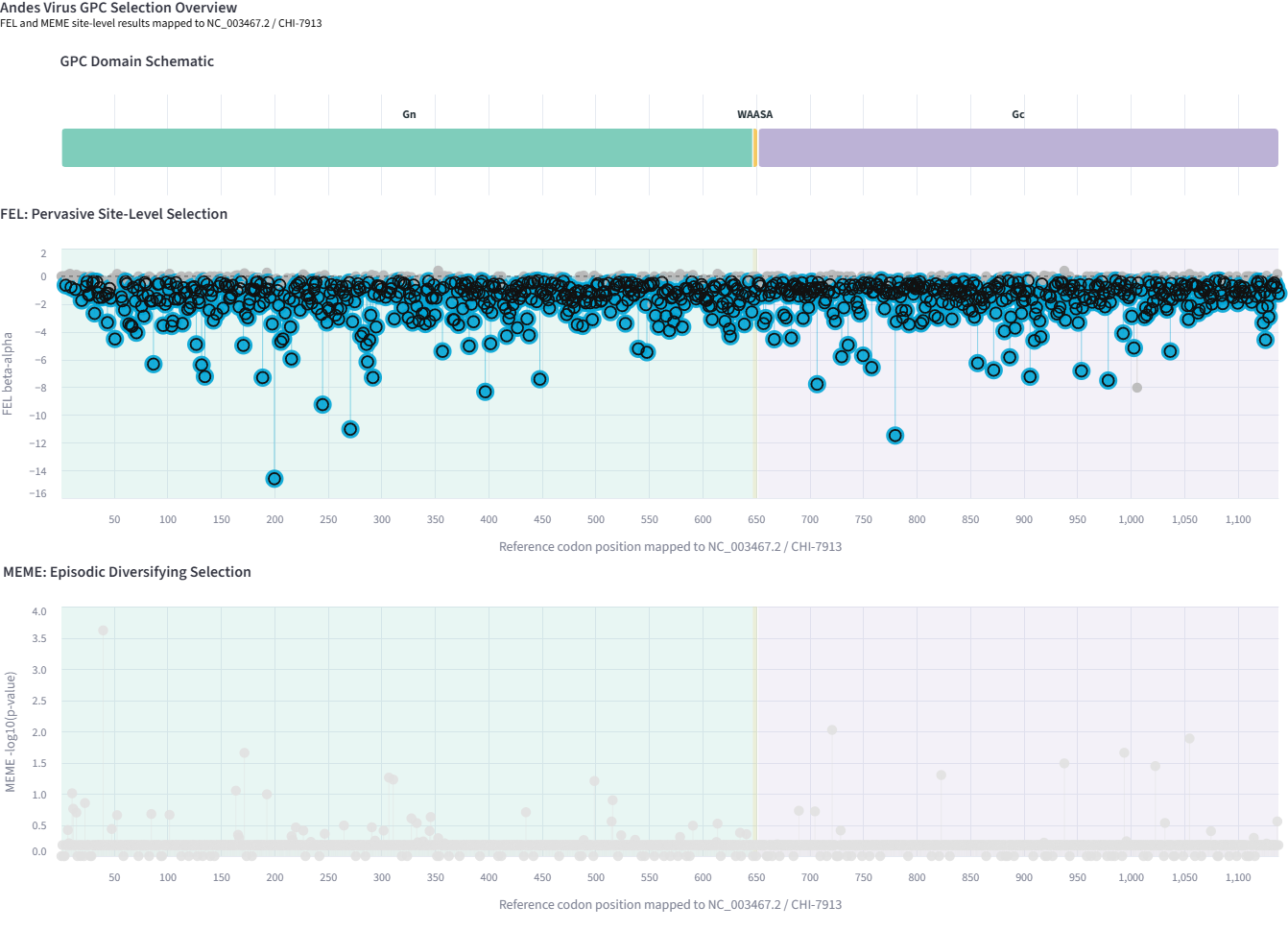
Pathoplexus now supports the Andes variant of Hantavirus (ANDV) - the variant identified in the recent MV Hondius cases: https://pathoplexus.org/andv

The current dataset reflects all data available on INSDC (Genbank/ENA/DDBJ), plus any uploads from the community.

Sequences can be uploaded via drag-and-drop on our website (or via API) as Open (immediately public + sent to INSDC) or Restricted-Use (up to 1 year), which protects from preprints/publications without approval from submitters.

This is an ongoing outbreak of high interest, with few sequences available. In such a situation, Restricted-Use sequences are highly unlikely to be ‘background’ sequences. Please ensure you follow our Data Use Terms in preprints/publications & co-author with other submitters. Pathoplexus will enforce our DUT with journals and request retraction if necessary.

Our Executive Board fast-tracked this to support rapid data sharing as new sequences become available. We’ll continue to update ANDV on Pathoplexus in the coming days and weeks.

:folded_hands:t2: Huge thanks to everyone involved in caring for patients, testing samples, coordinating response, and sharing data; as well as to the Pathoplexus team and Exec Board for working at speed for this launch.
3 Likes

Many thanks Emma & team for this rapid reaction and for creating such an important place to share the sequences ! The Swiss sequence is uploaded now as well for restricted use:

PP_006W5SB.2, PP_006W5T9.2 and PP_006W5U7.1

And more are coming! Also see the joint report: Preliminary analysis of Orthobunyavirus andesense virus sequences from a cruise-ship related cluster, May 2026

1 Like