Alvin Crespo-Bellido1, Jennifer L. Havens1, Thomas P. Peacock2,3, Florence Débarre4, Martha I. Nelson1
1 Division of Intramural Research, National Library of Medicine, National Institutes of Health, Bethesda, MD USA
2 The Pirbright Institute, Woking, UK
3Department of Infectious Disease, Imperial College London, UK
4 Institut d’Écologie et des Sciences de l’Environnement, CNRS, Sorbonne Université, UPEC, IRD, INRAE, Paris, France
Abstract
Here, we describe an outbreak of highly pathogenic avian influenza viruses belonging to H5N1 clade 2.3.4.4b in August 2026 that caused high mortality on a mink farm in Salt Lake County, Utah, using data generated by the US Department of Agriculture. Genetic sequencing of the mink viruses identified the genotype as B3.13, which currently circulates in US dairy cattle and has been reported on dairies in Utah, Texas, and Idaho in 2026. Based on ten genome sequences in Utah mink collected August 7, 2026, the mink outbreak is positioned within the 2026 cattle clade. The most closely related viruses were sampled in May 2026 in Texas cattle. Several months of unsampled transmission chains between the Texas cattle and Utah mink outbreaks leave many open questions about how the virus entered the mink farm. Additional PB2 mammalian adaptations were not selected for in mink, since the cattle-adapted B3.13 virus already had the PB2-M631L mutation that increases replication in mammals. However, all ten Utah mink viruses had a PB1-K388R substitution that was previously observed in the H5N1 mink outbreak in Spain but rarely occurs in avian hosts and was not seen in cattle.
Background
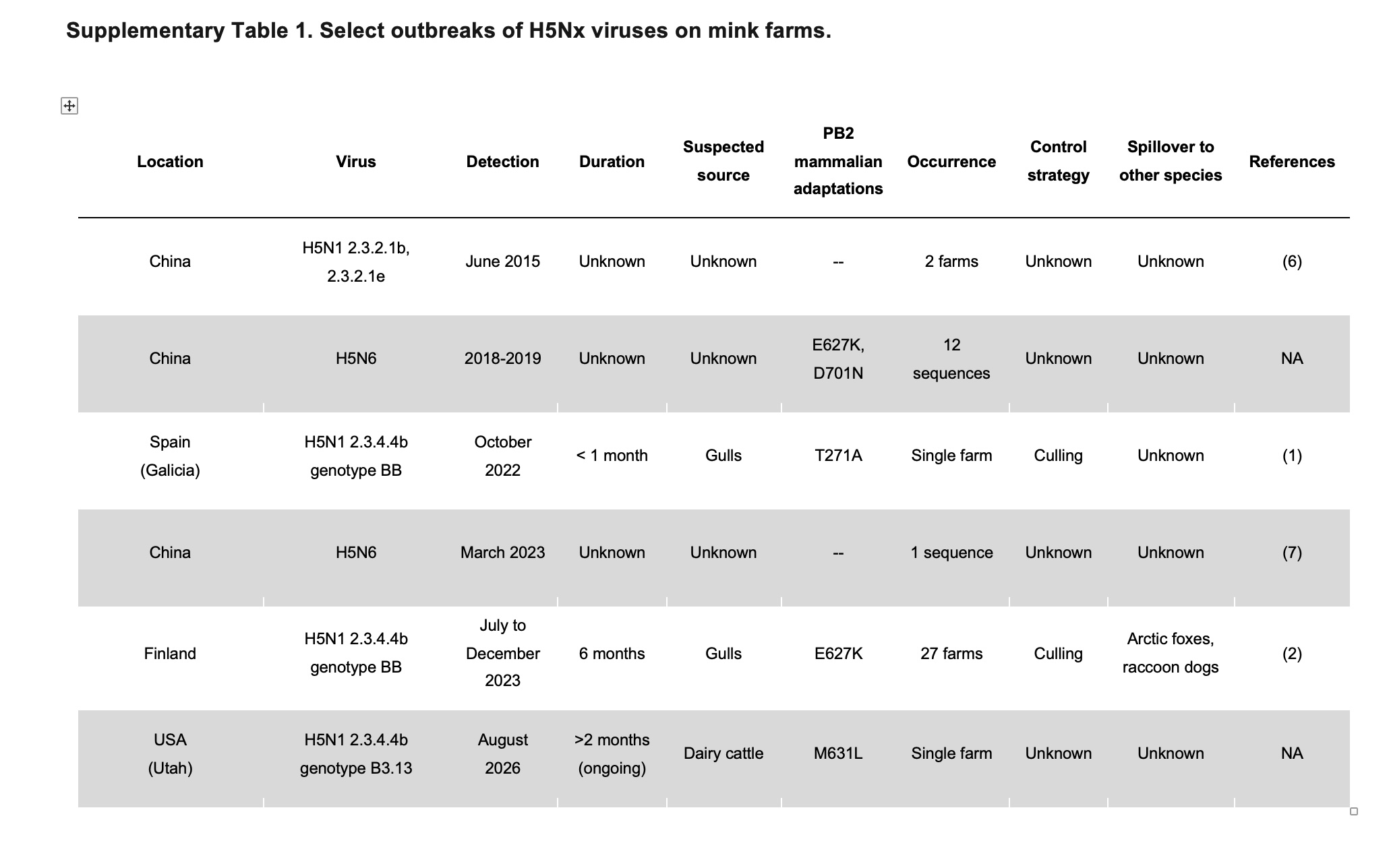
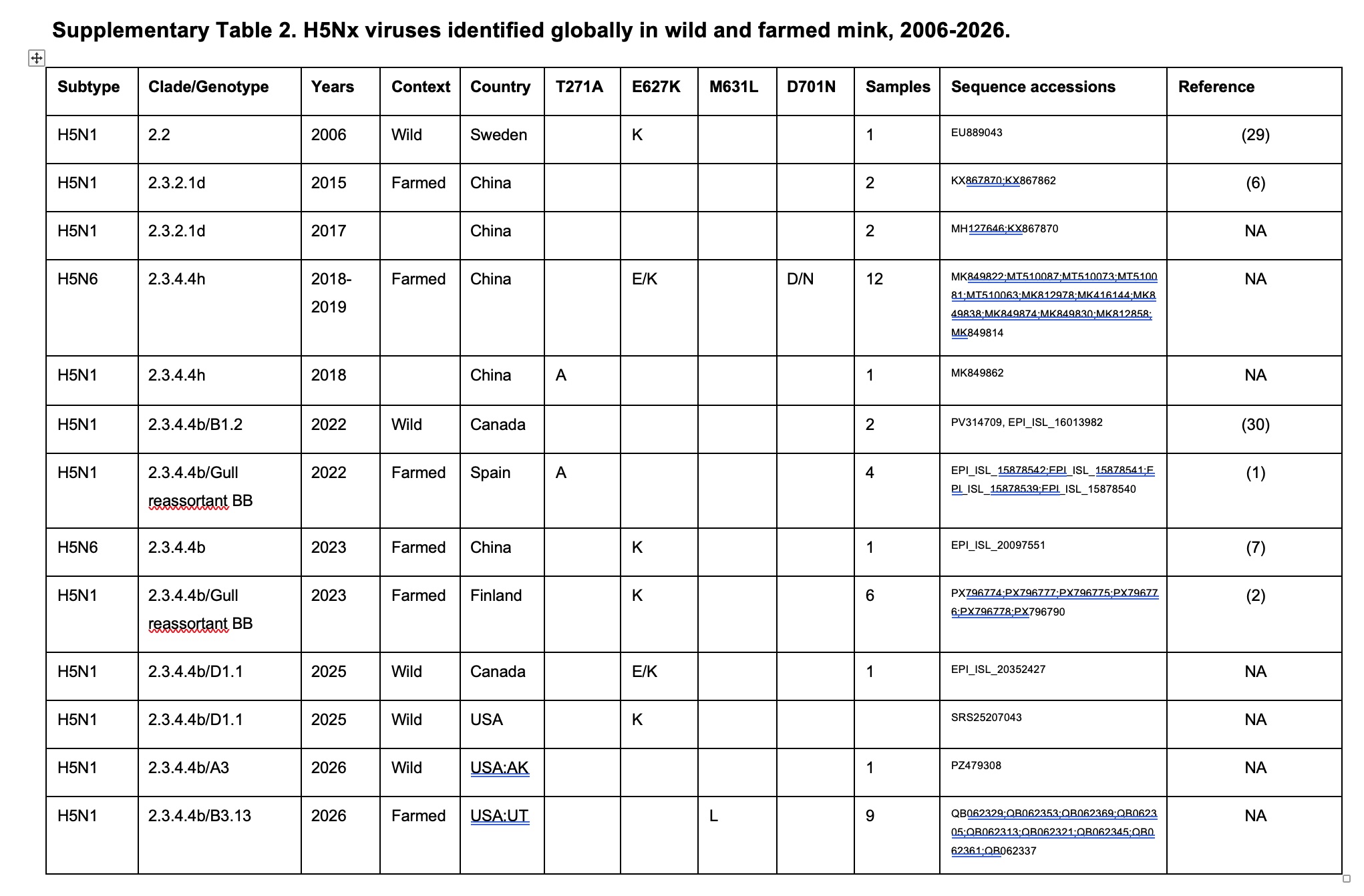
Highly pathogenic avian influenza (HPAI) viruses belonging to H5N1 clade 2.3.4.4b have circulated in US dairy cattle since 2024, providing opportunities for mammalian-adapted H5N1 viruses to spill over into a wide range of other host species, including humans, domestic birds, wild peridomestic birds, wild terrestrial carnivores, and domestic cats. However, prior to August 2026, H5N1 viruses were never reported in captive mink in the Americas, despite the high susceptibility of mustelids to influenza. H5N1 clade 2.3.4.4b viruses infected captive mink in two European countries: Spain in 2022 (1) and Finland in 2023 (2) (Supplementary Table 1). Wild mink in North America have been infected with H5N1 clade 2.3.4.4b viruses belonging to genotypes A3, B1.2, and D1.1 (Supplementary Table 2). In all these cases, wild birds were believed to be the source of the mink infections.
Alongside pigs, infection of mink with avian influenza viruses is a particular concern. Relative to other susceptible mammalian hosts (e.g., canines, equines, phocines), both swine and mink express a high proportion of ɑ2,6- linked sialic acids, similar to those found in the human upper respiratory tract (3). Additionally, mink are highly susceptible to human seasonal influenza viruses (4). Human-origin viruses are periodically isolated from farmed mink, most likely transmitted by reverse zoonosis from farm workers. With susceptibility to both avian and human influenza viruses, farmed mink could potentially act as a mixing vessel for genomic reassortment between human and avian strains (5), leading to new variants with an enhanced capacity to infect humans. When H5N1 was identified on a mink farm in Spain, the decision to depopulate the entire farm was announced two weeks later (1).
Results
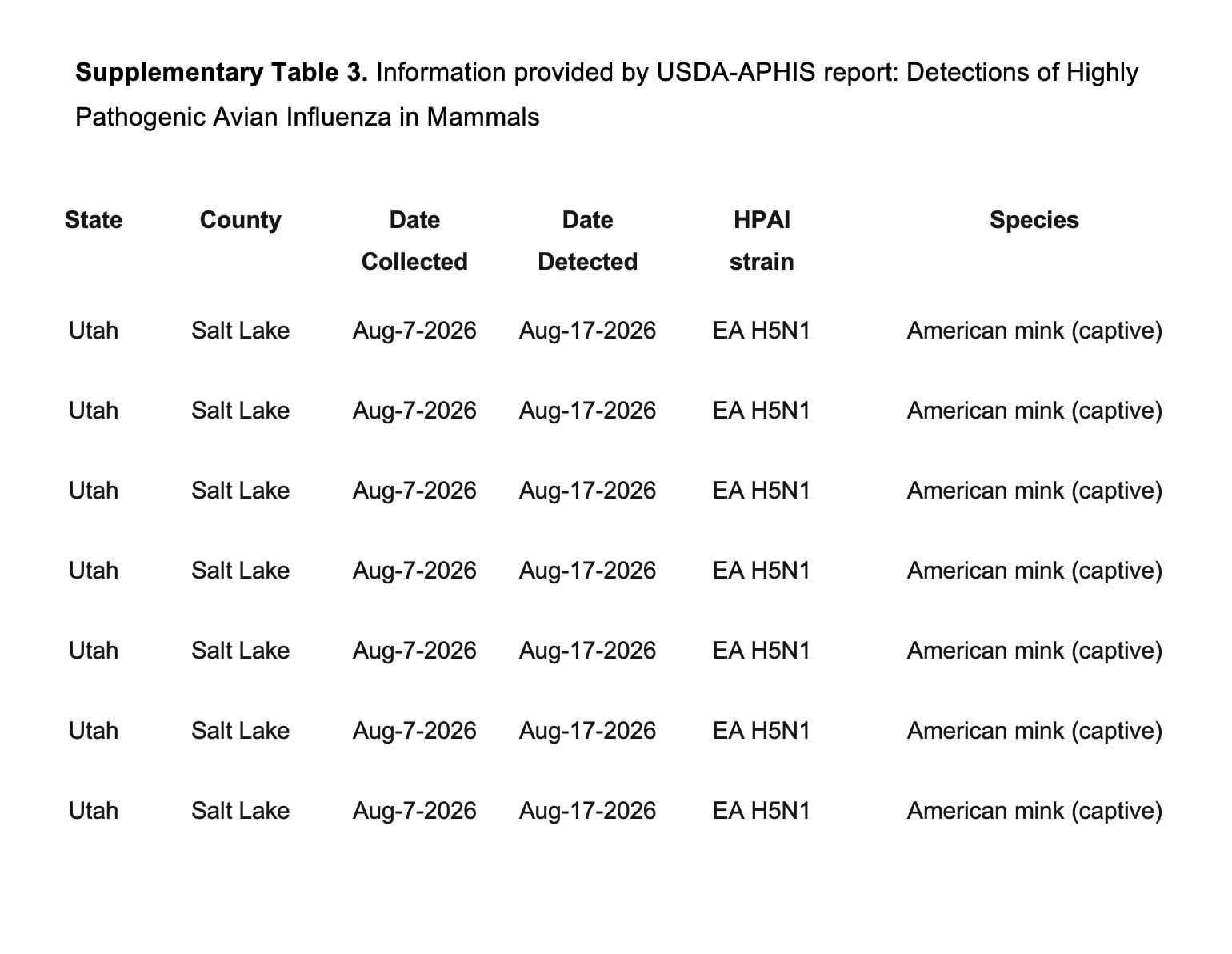
First documented HPAI outbreak on a mink farm in the Americas. On August 17, 2026, HPAI was detected by PCR in captive American mink in Salt Lake County, Utah by the USDA Animal Plant Health Inspection Service National Veterinary Services Laboratories (USDA-NVSL) (Supplementary Table 3). The samples were collected from mink on August 7, 2026. As of September 29, 2026, the outbreak is reportedly ongoing in the Utah mink farm, based on the APHIS website, and news sources (8), although no samples are available from later dates. HPAI outbreaks have been reported in dairy cattle in three other counties in northern Utah in 2026, but no HPAI outbreaks have been reported in dairy cattle in Salt Lake County, where the mink outbreak occurred (Figure 1A).
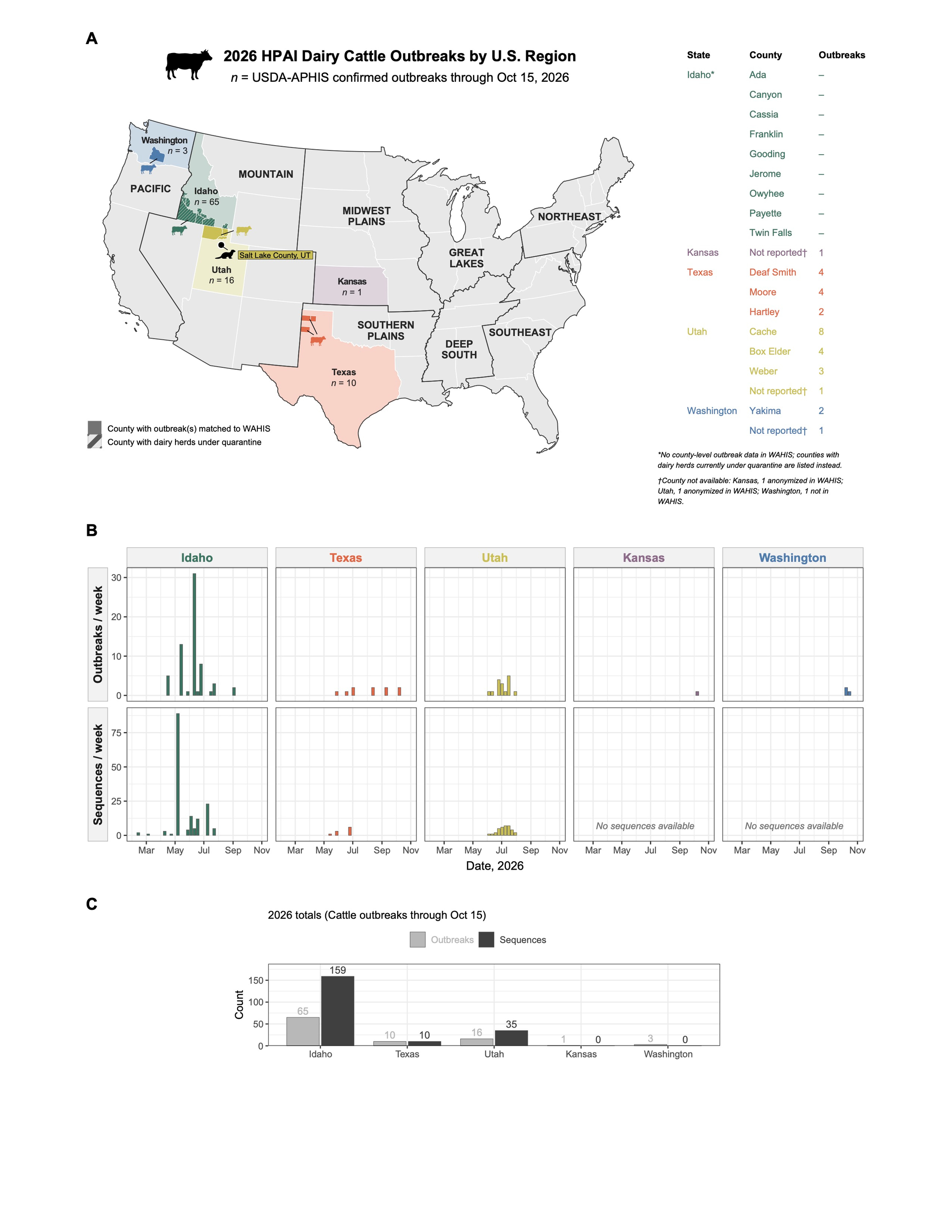
Figure 1. HPAI outbreaks reported in US dairy cattle during January 1 - October 15, 2026. (A) Map of 2026 HPAI outbreaks in US dairy cattle and farmed mink. States with confirmed HPAI outbreaks in dairy cattle in 2026 are shown in light shading, similar to Figure 1. County locations were obtained by cross-referencing USDA-APHIS outbreaks with WOAH-WAHIS reports; counties with matched outbreaks are shown in solid color. No county-level data were available in WAHIS for Idaho, so hatching indicates Idaho counties with dairy herds under quarantine as of October 6, 2026 (Source: Idaho State Department of Agriculture), which were not matched to individual outbreaks. The table lists outbreaks per county. The black dot indicates the location of the HPAI outbreak in farmed mink in Salt Lake County, Utah. Black lines define US geographic regions. (B) Weekly outbreaks confirmed by USDA-APHIS (top row, by date of confirmation) and publicly available cattle sequences (bottom row, by collection date), by state, for the time period January 1 – October 15, 2026. (C) Total outbreaks and genome sequences per state over the same period.
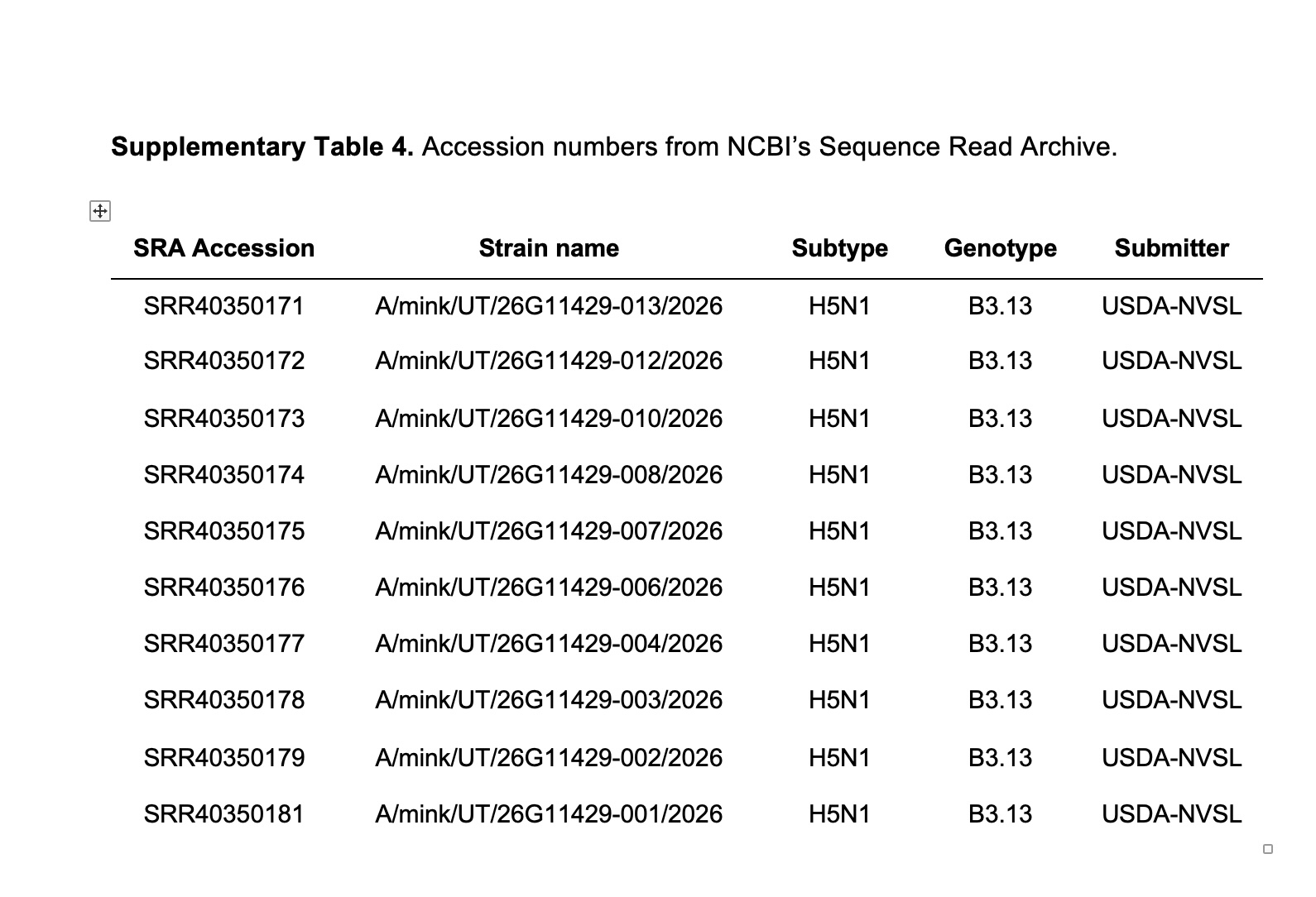
B3.13 genotype that circulates in US dairy cattle identified in Utah mink. Ten whole-genome sequences (WGS) of H5N1 in Utah mink were generated using Illumina iSeq 100 by USDA-NVSL in Ames, Iowa. Sequences were published on NCBI’s Sequence Read Archive (SRA) on August 28, 2026, with accessions SRR40350171-SRR40350179 and SRR40350181 (Supplementary Table 4). Genome assemblies were generated by the Andersen lab at Scripps Research Institute. USDA’s GenoFlu H5N1 genotyping tool classified all ten mink H5N1 sequences as belonging to the B3.13 genotype that circulates in US dairy cattle. To examine the phylogenetic relationships of the mink samples to the broader B3.13 diversity, a phylogenetic tree was inferred using a maximum likelihood (ML) approach for 5,596 concatenated B3.13 genome sequences collected in the United States, the vast majority of which were sequenced by USDA-NVSL and published on SRA or NCBI Virus. An MCC tree was inferred using Bayesian approaches available in BEAST X for a subsampled B3.13 dataset (n = 839 genomes, Figure 2). The Utah mink viruses are positioned within the 2026 B3.13 cattle clade, which includes all strains collected in 2026 from dairy cattle in Idaho, Texas, and Utah. Despite requirements for pre-interstate movement H5N1 testing in lactating dairy cattle, the B3.13 virus continued to move in cattle in 2026 between the Mountain region (Idaho and Utah) and Southern plains (Texas).
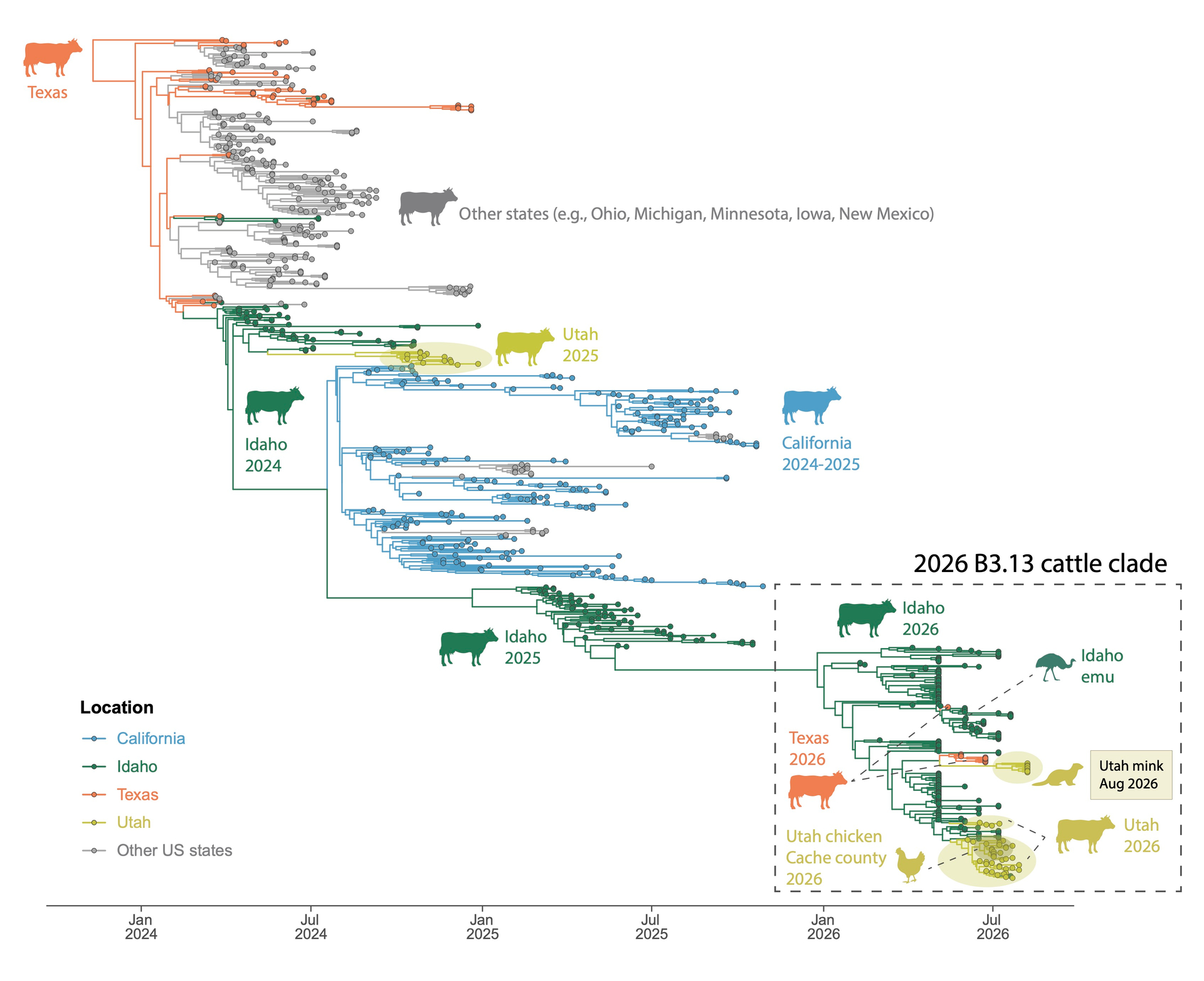
Figure 2. B3.13 outbreak in US dairy cattle, 2024-2026. MCC tree inferred for 839 B3.13 genomes, subsampled from a larger dataset of 5,596 genomes, collected in US dairy cattle, felines, humans, wild birds, domestic birds, wild terrestrial mammals, and farmed mink during 2024-2026. Tips and branches shaded by US state. A more detailed subtree of the mink cluster and closely related Texas cattle strains is provided in Figure 3.
Weeks of cryptic circulation in mink prior to HPAI detection on August 7, 2026. The genetic diversity of the ten mink viruses suggests that B3.13 had been circulating undetected in mink for several weeks. The estimated median time to the most recent common ancestor (TMCRA) is July 4, 2026, with a 95% highest posterior density (HPD) interval from June 21 - July 15, 2026 (Figure 3A). The Utah mink viruses form a cluster, which suggests a single viral introduction onto the farm.
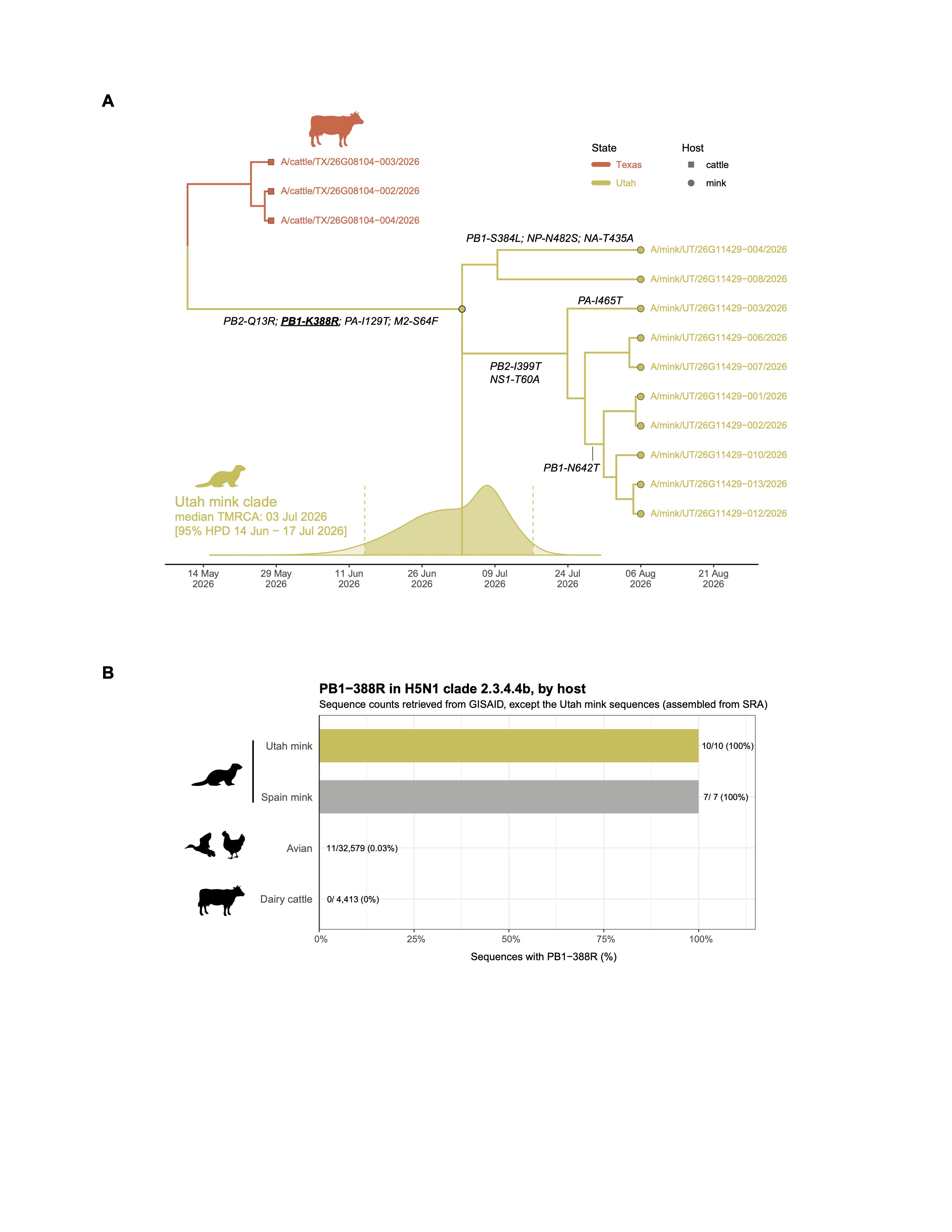
Figure 3. Sub-tree with Utah mink outbreak and closely related bovine strains. (A) The posterior distribution of the TMCRA of the mink outbreak, with 95% HPD, is provided. The PB1-K388R substitution observed in all ten Utah mink viruses, which was previously observed in the Spanish mink outbreak in 2022 (1), is highlighted in bold. (B) Proportion of H5N1 clade 2.3.4.4b viruses with the PB1-K388R substitution, by host group: all avian hosts, US dairy cattle, Utah farmed mink, and Spain farmed mink.
No additional mammalian adaptations acquired in mink (so far). The B3.13 lineage circulating in dairy cattle already has the M631L substitution in PB2 that increases viral replication in mammals (9,10), reducing the selective pressure for additional mammalian adaptations in mink. The cattle B3.13 strain also possesses NA mutations K432E and N434S that may play a similar role to those seen in previous mink outbreaks, specifically in the second sialic acid binding site (2,11) relative to the closest avian relatives. Of note, a PB1-K388R substitution was present in all ten Utah mink viruses (Figure 3B) that is rarely observed in wild birds but was observed in the H5N1 clade 2.3.4.4b viruses in farmed mink in Spain in October 2022 (1). The mutation has been reported to arise de novo within-host in pigs experimentally infected with a Eurasian avian-like swine H1N1 virus (12). There is little experimental data available about the phenotype of the K388R mutation in PB1, but its repeated emergence of in mammalian hosts warrants further investigation. Note that the sequences in this analysis were sampled August 7, 2026 and more recent genome sequences are not available to monitor additional mutations that occurred in mink after that date.
Direct source of mink outbreak is unknown. Texas cattle strains sampled on May 28, 2026 are the most closely related ancestors of the Utah mink viruses (Figure 2), but there is a three-month gap before the detection of HPAI in Utah mink on August 7, 2026. The large gap makes it difficult to reconstruct the precise route of transmission between Idaho, Texas, and Utah cattle – and potentially other host species – prior to the emergence of the virus in mink. Avian hosts (wild or domestic) could theoretically serve as intermediary hosts between cattle and mink for B3.13. Farmed mink are often fed poultry products. HPAI reporting tends to be high in domestic birds owing to high mortality and financial reimbursement from the Federal government, but outbreaks can be missed on smaller commercial farms. Wild birds are a main source of HPAI in wild mink, but the B3.13 genotype does not appear to sustain transmission in peridomestic species (e.g., grackle, American robin) following spillover events from cattle and there is no evidence of wild birds serving as sources of B3.13 outbreaks in livestock after the initial introduction into Texas cattle in 2024 (Figure 4).
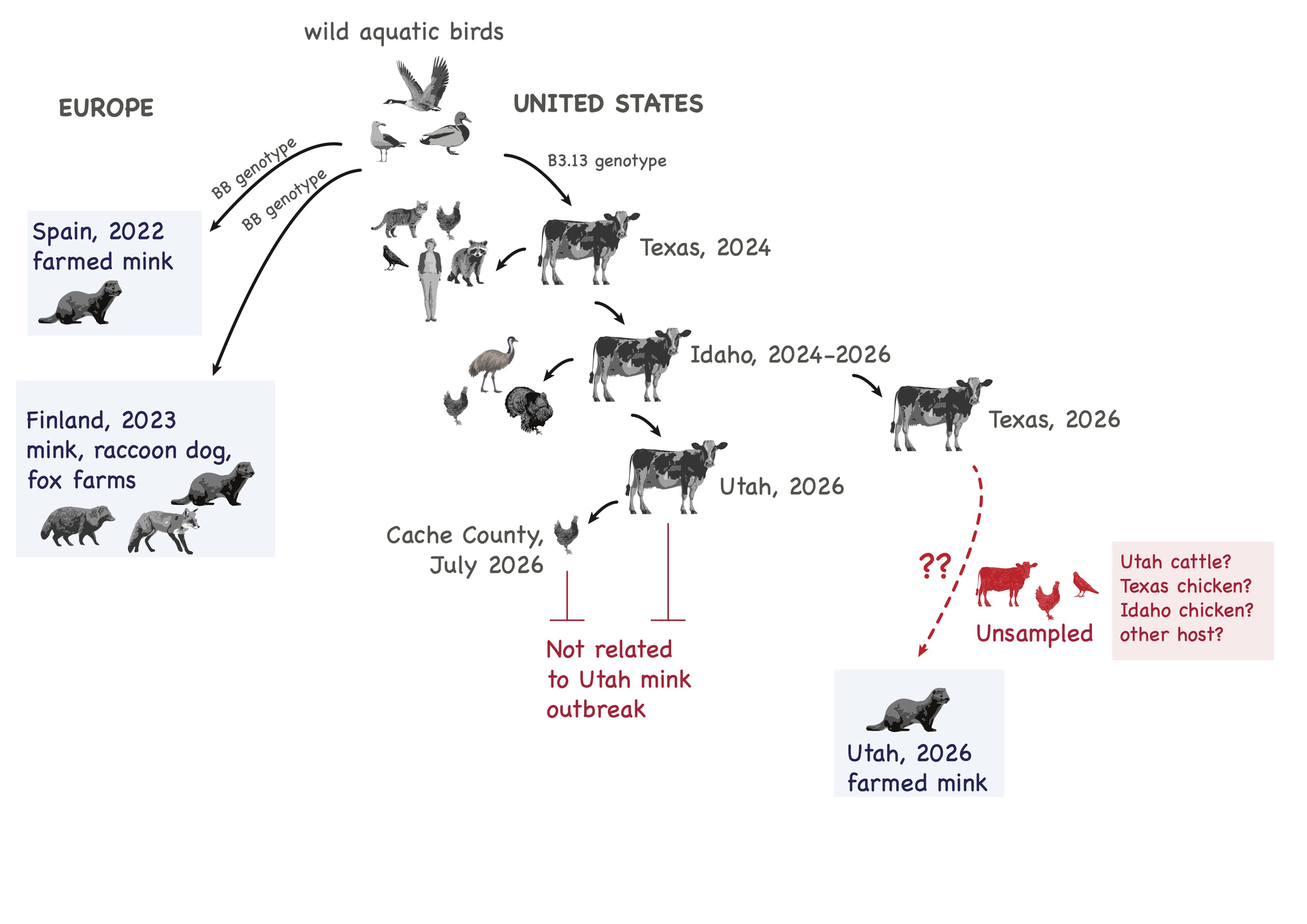
Figure 4. Different ecology of HPAI in mink farms in Europe versus the United States. In Europe, wild birds (most likely gulls) were inferred to be the direct source of H5N1 outbreaks on mink farms in 2022 and 2023. In the United States, dairy cattle have emerged as a major source of unidirectional spillover of the B3.13 genotype into a wide range of other species, including humans, domestic birds, domestic cats, wild birds, wild terrestrial carnivores, and, as of August 2026, farmed mink.
Source of mink outbreak not likely to be frozen food. The root-to-tip regression of genetic distance versus time (Figure 5) indicates that the Utah mink viruses are evolving at a standard rate for influenza. There is no evidence that the virus has been preserved in a non-replicating frozen state. This in contrast to certain B3.13 outbreaks in felines that appeared to be sourced from frozen pet food sourced by poultry products).
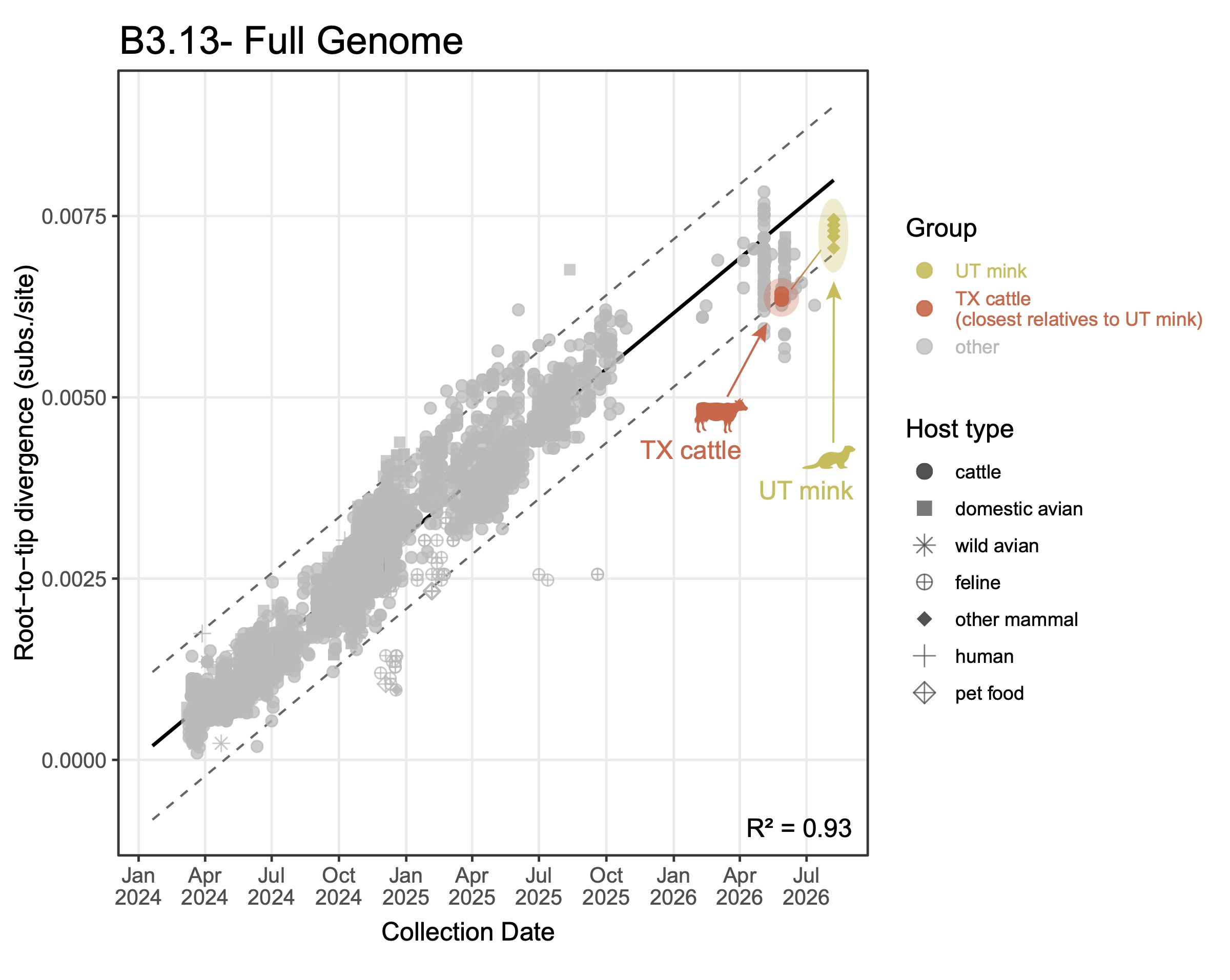
Figure 5. B3.13 root-to-tip distance plot for the concatenated genome phylogeny (n = 4,736), highlighting the Utah mink samples and their closest relatives (i.e., the TX cattle sequences). Dashed lines indicate ± 2.5x the residual standard deviation.
B3.13 continues to migrate between Idaho, Texas, and Utah cattle. Texas was the original epicenter of the B3.13 outbreak in US dairy cattle (Figure 2). California emerged as the national hotspot during the autumn of 2024. The last sampled California virus was collected October 28, 2025 and the virus appeared to be eliminated in California by 2026. Idaho appeared to become the next national hotspot for the B3.13 outbreak in US dairy cattle, with 65 outbreaks reported in 2026 (Figure 3C). The tree suggests there have been at least two B3.13 introductions into Texas cattle from Idaho during 2026 and two introductions from Idaho to Utah cattle (Figure 2). However, missing data from cattle could influence these interpretations. HPAI also was reported in dairy cattle in Kansas (October 8, 2026) and Washington State (October 15, 2026), but sequences have not been released, and the genotype has not been confirmed, so how the Washington and Kansas outbreaks relate to viruses in Idaho, Utah, and Texas remains unclear.
Outstanding Questions
● How did B3.13 spread from cows to mink? In Europe, wild birds (gulls) are the most likely source of H5N1 outbreaks in mink in Spain and Finland, based on genetic evidence (the BB genotype found in mink predominantly circulates in European gulls) and the fact that gulls are attracted to food waste in mink barns. The transmission route between Texas cattle to Utah mink is considerably less clear. Shared workers, vehicles, or equipment have also been proposed to spread the B3.13 virus locally from dairies to poultry farms. Since mink receive a wide variety of food sources that are transported long distances, the source of the mink outbreak could involve poultry or cattle products from a different state.
● Will the virus spread to additional mink farms? Thus far, the Utah mink outbreak appears to be contained to one farm, but local spread to additional farms is a concern. In contrast to pigs and cows, mink are not routinely transported between farms. Yet, in 2020, SARS-CoV-2 spread between six mink farms in Utah. Local free roaming cats were infected by mink, but their role in spread between farms remains unclear (13). Mink infected with SARS-CoV-2 were not culled, and there are currently no plans to cull HPAI-infected mink in Utah.
● Is the virus already adapted to mink, or will it continue to adapt to a new host? A limitation of this report is that the sequences analyzed were collected during the earlier stage of the mink outbreak (August 7, 2026). As of October 21, 2026 there are no additional sequences available from more recent mink samples.
● How much cryptic transmission occurs in cattle? Almost three years into the B3.13 outbreak in US dairy cattle, the virus appears to have been eliminated in most states, including California, which is a major achievement. However, the persistence of B3.13 in dairy cattle in Idaho, Texas, and Utah continues to provide opportunities for spillover to new species, including mink. Despite active surveillance, large sampling gaps in dairy cattle make it difficult to track the shifting geography of spillover risk, identify key reservoirs for the virus, and determine the origins of outbreaks in other species, including mink.
● What other US mink populations are at risk for B3.13? Two states where B3.13 continues to circulate in dairy cattle, Utah and Idaho, also happen to be two of the country’s largest mink producers. Texas does not have commercial mink farms, which are concentrated in cooler climates, for example Wisconsin, Utah, Idaho, and Oregon. Fortunately, the B3.13 virus has never been detected in dairy cattle in Oregon or Wisconsin. However, other H5N1 clade 2.3.4.4b genotypes circulate in wild birds in Wisconsin and Oregon and have been detected in a dairy farm (WI; D1.1 genotype (14,15)) and swine (OR; D1.2 genotype (16)). The absence of documented spillovers of H5N1 from wild birds to mink in North America is not well explained, given the role of wild birds in the mink outbreaks in Spain and Finland. There are gaps in our understanding of HPAI ecology in North America, especially in gulls. The recent outbreak in Utah is a reminder that mink are highly susceptible to both avian influenza and human seasonal viruses. H5N1 peaks in North American wild birds at the same time as seasonal influenza in humans, during cooler winter months, providing opportunities for avian and human-origin viruses to spill over into mink at the same time and potentially reassort.
Methods
B3.13 genome sequence alignments. To generate a comprehensive dataset for B3.13 genomes to use in our phylogenetic analyses, we first downloaded all H5Nx clade 2.3.4.4b genomes for North America, South America and Antarctica by querying the Global Initiative on Sharing All Influenza Data (GISAID; https://gisaid.org/) and NCBI Virus (17) databases for all H5Nx clade 2.3.4.4b samples collected between November 1, 2021 and October 7, 2026 with available genomic sequences for all eight gene segments (accessed on October 7, 2026). Additionally, consensus genomes from raw reads deposited to the NCBI Sequence Read Archive and associated with BioProjects PRJNA1102327, PRJNA1122849, PRJNA1134696, PRJNA1219588, PRJNA1207547, PRJNA980729 were downloaded from the Andersen Lab’s avian influenza GitHub repository ( GitHub - andersen-lab/avian-influenza: Consensus sequences for U.S. H5N1 clade 2.3.4.4b · GitHub ). This included the 10 samples collected from mink in Supplementary Table 2. The samples were assigned a genotype using the GenoFLU genotyping tool (18). A dataset for genotype B3.13 (n = 5,596) was compiled for each gene segment (i.e., PB2, PB1, PA, HA, NP, NA, MP and NS) after removing duplicate sample entries across databases. Since all B3.13 samples were available on GenBank and/or SRA, no sequence from GISAID was used in the analysis. Each segment dataset was aligned using MAFFT (19,20) and trimmed to the coding sequence region. All eight segment alignments were concatenated into a single genome alignment using ConcatenatorGUI (21).
B3.13 phylogenetic analysis. Maximum-likelihood (ML) phylogenies were inferred for the concatenated genome alignment using IQ-TREE v2.47 (22). A general-time reversible (GTR) model of nucleotide substitution was used with among-site rate heterogeneity modelled through a discretized gamma distribution (+Γ4) with 4 rate-categories and 1,000 ultra-fast bootstrap (UFBOOT) replicates, using the high-performance computational capabilities of the Biowulf Linux cluster at the National Institutes of Health (http://biowulf.nih.gov). An additional ML phylogeny was inferred for sequences with complete collection date metadata. The temporal signal for the phylogeny was evaluated by plotting the root-to-tip distance for all sequences using the heuristic residual mean squared rooting approach in TempEst v1.5.3 (23).
Bayesian phylogeographic analysis. To estimate the time to the most recent common ancestor of the mink outbreak and infer ancestral geographic origins, we assembled a subsampled dataset of 839 concatenated B3.13 genomes with complete collection dates and state-level metadata. All 230 sequences collected in 2026 were retained. The remaining sequences were subsampled by retaining at most three sequences per state per ISO week, with selections spaced evenly across collection dates within each week. For the discrete phylogeographic analysis, locations were assigned to five categories: Idaho (n = 277), Utah (n = 66), Texas (n = 55), California (n = 198), and other US states (n = 243).
Bayesian analyses were performed in BEAST X v1.10.5 (24) using the BEAGLE3 library (25) and default BEAUti X priors. We used a GTR+Γ4 nucleotide substitution model, an uncorrelated lognormal relaxed molecular clock, and a nonparametric skygrid coalescent tree prior (26). Two independent runs of the Markov chain Monte Carlo analysis were performed for 150 million iterations each, with samples recorded every 15,000 iterations. Runs were combined using LogCombiner v1.10.4 while discarding 10% as burn-in. Convergence was assessed in Tracer v1.7.2 by confirming effective sample sizes of at least 200 for all parameters. Maximum clade credibility trees were generated from the posterior tree distribution using TreeAnnotator v1.10.4. Posterior distribution of the time to the most recent common ancestor for the clade of interest was extracted from the posterior trees using TreeStat v1.10.4.
Outbreak and sequence data. We obtained confirmed HPAI outbreaks in dairy cattle from USDA-APHIS (https://www.aphis.usda.gov/livestock-poultry-disease/avian/avian-influenza/hpai-detections/hpai-confirmed-cases-livestock) and kept those confirmed between January 1 and October 15, 2026, which were all in Idaho (n = 65), Utah (n = 16), Texas (n = 10), Washington (n = 3) and Kansas (n = 1). To find county locations, we cross-referenced each USDA-APHIS outbreak with the WOAH-WAHIS reports for the U.S. event (https://wahis.woah.org/#/in-event/6446/dashboard) using the USDA outbreak identifier.
Mutation analysis with TreeTime. Coding sequences for each individual segment alignment were translated with Nextclade (27). Ancestral sequence reconstruction and mutation calling for the branches within and leading to the mink clade were then performed with TreeTime v0.11.4 (28), using the time-scaled concatenated B3.13 phylogeny and the translated segment alignments as inputs.
Acknowledgements
This research was supported in part by the Intramural Research Program of the National Institutes of Health (NIH). The contributions of the NIH author(s) are considered Works of the United States Government. The findings and conclusions presented in this paper are those of the author(s) and do not necessarily reflect the views of the NIH or the U.S. Department of Health and Human Services, or the United States government. We gratefully acknowledge all data contributors, i.e., the Authors and their Originating laboratories responsible for obtaining the specimens, and their Submitting laboratories for generating the genetic sequence and metadata and sharing via the GISAID Initiative.
References
1. Agüero M, Monne I, Sánchez A, Zecchin B, Fusaro A, Ruano MJ, et al. Highly pathogenic avian influenza A(H5N1) virus infection in farmed minks, Spain, October 2022. Eurosurveillance. 2023 Jan 19;28(3):2300001. doi:10.2807/1560-7917.ES.2023.28.3.2300001
2. Kareinen L, Tammiranta N, Kauppinen A, Zecchin B, Pastori A, Monne I, et al. Highly pathogenic avian influenza A(H5N1) virus infections on fur farms connected to mass mortalities of black-headed gulls, Finland, July to October 2023. Eurosurveillance. 2024 Jun 20;29(25):2400063. doi:10.2807/1560-7917.ES.2024.29.25.2400063
3. Sun H, Li F, Liu Q, Du J, Liu L, Sun H, et al. Mink is a highly susceptible host species to circulating human and avian influenza viruses. Emerg Microbes Infect. 2021 Jan;10(1):472–80. doi:10.1080/22221751.2021.1899058
4. Clayton MJ, Kelly EJ, Mainenti M, Wilhelm A, Torchetti MK, Killian ML, et al. Pandemic lineage 2009 H1N1 influenza A virus infection in farmed mink in Utah. J Vet Diagn Invest. 2022 Jan 1;34(1):82–5. doi:10.1177/10406387211052966
5. Peacock TP, Barclay WS. Mink farming poses risks for future viral pandemics. Proc Natl Acad Sci. 2023 Jul 25;120(30):e2303408120. doi:10.1073/pnas.2303408120
6. Jiang W, Wang S, Zhang C, Li J, Hou G, Peng C, et al. Characterization of H5N1 highly pathogenic mink influenza viruses in eastern China. Vet Microbiol. 2017 Mar 1;201:225–30. doi:10.1016/j.vetmic.2017.01.028
7. Liu K. Mink H5N6 clade2.3.4.4b reassortant virus in Eastern China exhibits high pathogenicity and airborne transmissibility in mammals [Internet]. 2026 May. doi:10.6084/m9.figshare.32197410.v2
8. Moilanen S. “Watch them die”: Bird flu is ravaging a Utah mink farm, killing 80% of the herd. State agriculture officials have no clear plan. The Salt Lake Tribune [Internet]. 2026 Sep 27. Available from: 'Watch them die': Bird flu outbreak at Utah mink farm largely unchecked, advocates say
9. Dholakia V, Quantrill JL, Richardson SAS, Pankaew N, Brown MD, Yang J, et al. Polymerase mutations underlie early adaptation of H5N1 influenza virus to dairy cattle and other mammals. Nat Commun. 2026 Jan 16;17(1):1603. doi:10.1038/s41467-026-68306-6
10. Zhang L, Lai Y, Cui Y, Yang Q, Shao Y, Ding S, et al. Emergence of mammalian-adaptive PB2 mutations enhances polymerase activity and pathogenicity of cattle-derived H5N1 influenza A virus. Nat Commun. 2025 Dec 20;17(1):1011. doi:10.1038/s41467-025-67753-x
11. Vries E de, Haan CA de. Letter to the editor: Highly pathogenic influenza A(H5N1) viruses in farmed mink outbreak contain a disrupted second sialic acid binding site in neuraminidase, similar to human influenza A viruses. Eurosurveillance. 2023 Feb 16;28(7):2300085. doi:10.2807/1560-7917.ES.2023.28.7.2300085
12. López-Valiñas Á, Valle M, Wang M, Darji A, Cantero G, Chiapponi C, et al. Vaccination against swine influenza in pigs causes different drift evolutionary patterns upon swine influenza virus experimental infection and reduces the likelihood of genomic reassortments. Front Cell Infect Microbiol. 2023 Mar 13;13. doi:10.3389/fcimb.2023.1111143
13. Cossaboom CM, Wendling NM, Lewis NM, Rettler H, Harvey RR, Amman BR, et al. One Health Investigation of SARS-CoV-2 in People and Animals on Multiple Mink Farms in Utah. Viruses. 2023 Jan;15(1):96. doi:10.3390/v15010096
14. Pekar JE, Gangavarapu K, Crespo-Bellido A, Peacock TP, Wertheim JO, Dudas G, et al. The emergence and molecular evolution of H5N1 influenza viruses in United States dairy cattle. bioRxiv; 2026 [cited 2026 Oct 8]. p. 2026.03.30.713641. doi:10.64898/2026.03.30.713641
15. U.S. Department of Agriculture A and PHIS. Agency Announcements [Internet]. 2025 [cited 2026 Oct 8]. Update: Genetic Sequencing Results for Wisconsin Dairy Herd Detection of Highly Pathogenic Avian Influenza. Available from: https://www.aphis.usda.gov/news/agency-announcements/update-genetic-sequencing-results-wisconsin-dairy-herd-detection-highly
16. U.S. Department of Agriculture A and PHIS. Agency Announcements [Internet]. 2024 [cited 2026 Oct 8]. USDA Animal and Plant Health Inspection Service Shares Update on H5N1 Detection in Oregon Swine and Bovine Vaccine Candidate Progression. Available from: https://www.aphis.usda.gov/news/agency-announcements/usda-animal-plant-health-inspection-service-shares-update-h5n1-detection
17. Brister JR, Ako-adjei D, Bao Y, Blinkova O. NCBI Viral Genomes Resource. Nucleic Acids Res. 2015 Jan 28;43(D1):D571–7. doi:10.1093/nar/gku1207
18. Youk S, Torchetti MK, Lantz K, Lenoch JB, Killian ML, Leyson C, et al. H5N1 highly pathogenic avian influenza clade 2.3.4.4b in wild and domestic birds: Introductions into the United States and reassortments, December 2021–April 2022. Virology. 2023 Oct 1;587:109860. doi:10.1016/j.virol.2023.109860
19. Katoh K, Standley DM. MAFFT Multiple Sequence Alignment Software Version 7: Improvements in Performance and Usability. Mol Biol Evol. 2013 Apr 1;30(4):772–80. doi:10.1093/molbev/mst010
20. Katoh K, Toh H. Recent developments in the MAFFT multiple sequence alignment program. Brief Bioinform. 2008 Jul 1;9(4):286–98. doi:10.1093/bib/bbn013
21. Vences M, Patmanidis S, Kharchev V, Renner SS. Concatenator, a user-friendly program to concatenate DNA sequences, implementing graphical user interfaces for MAFFT and FastTree. Bioinforma Adv. 2022 Jan 1;2(1):vbac050. doi:10.1093/bioadv/vbac050
22. Minh BQ, Schmidt HA, Chernomor O, Schrempf D, Woodhams MD, von Haeseler A, et al. IQ-TREE 2: New Models and Efficient Methods for Phylogenetic Inference in the Genomic Era. Mol Biol Evol. 2020 May 1;37(5):1530–4. doi:10.1093/molbev/msaa015
23. Rambaut A, Lam TT, Max Carvalho L, Pybus OG. Exploring the temporal structure of heterochronous sequences using TempEst (formerly Path-O-Gen). Virus Evol. 2016 Jan 1;2(1):vew007. doi:10.1093/ve/vew007
24. Baele G, Ji X, Hassler GW, McCrone JT, Shao Y, Zhang Z, et al. BEAST X for Bayesian phylogenetic, phylogeographic and phylodynamic inference. Nat Methods. 2025 Aug;22(8):1653–6. doi:10.1038/s41592-025-02751-x
25. Ayres DL, Cummings MP, Baele G, Darling AE, Lewis PO, Swofford DL, et al. BEAGLE 3: Improved Performance, Scaling, and Usability for a High-Performance Computing Library for Statistical Phylogenetics. Syst Biol. 2019 Nov 1;68(6):1052–61. doi:10.1093/sysbio/syz020
26. Gill MS, Lemey P, Faria NR, Rambaut A, Shapiro B, Suchard MA. Improving Bayesian Population Dynamics Inference: A Coalescent-Based Model for Multiple Loci. Mol Biol Evol. 2013 Mar 1;30(3):713–24. doi:10.1093/molbev/mss265
27. Aksamentov I, Roemer C, Hodcroft EB, Neher RA. Nextclade: clade assignment, mutation calling and quality control for viral genomes. J Open Source Softw. 2021;6(67):3773.
28. Sagulenko P, Puller V, Neher RA. TreeTime: Maximum-likelihood phylodynamic analysis. Virus Evol. 2018 Jan 1;4(1):vex042. doi:10.1093/ve/vex042
29. Kiss I, Gyarmati P, Zohari S, Ramsay KW, Metreveli G, Weiss E, et al. Molecular characterization of highly pathogenic H5N1 avian influenza viruses isolated in Sweden in 2006. Virol J. 2008 Oct 6;5(1):113. doi:10.1186/1743-422X-5-113
30. Signore AV, Giacinti J, Jones MEB, Erdelyan CNG, McLaughlin A, Alkie TN, et al. Spatiotemporal reconstruction of the North American A(H5N1) outbreak reveals successive lineage replacements by descendant reassortants. Sci Adv. 2025 Jul 9;11(28):eadu4909. doi:10.1126/sciadv.adu4909